
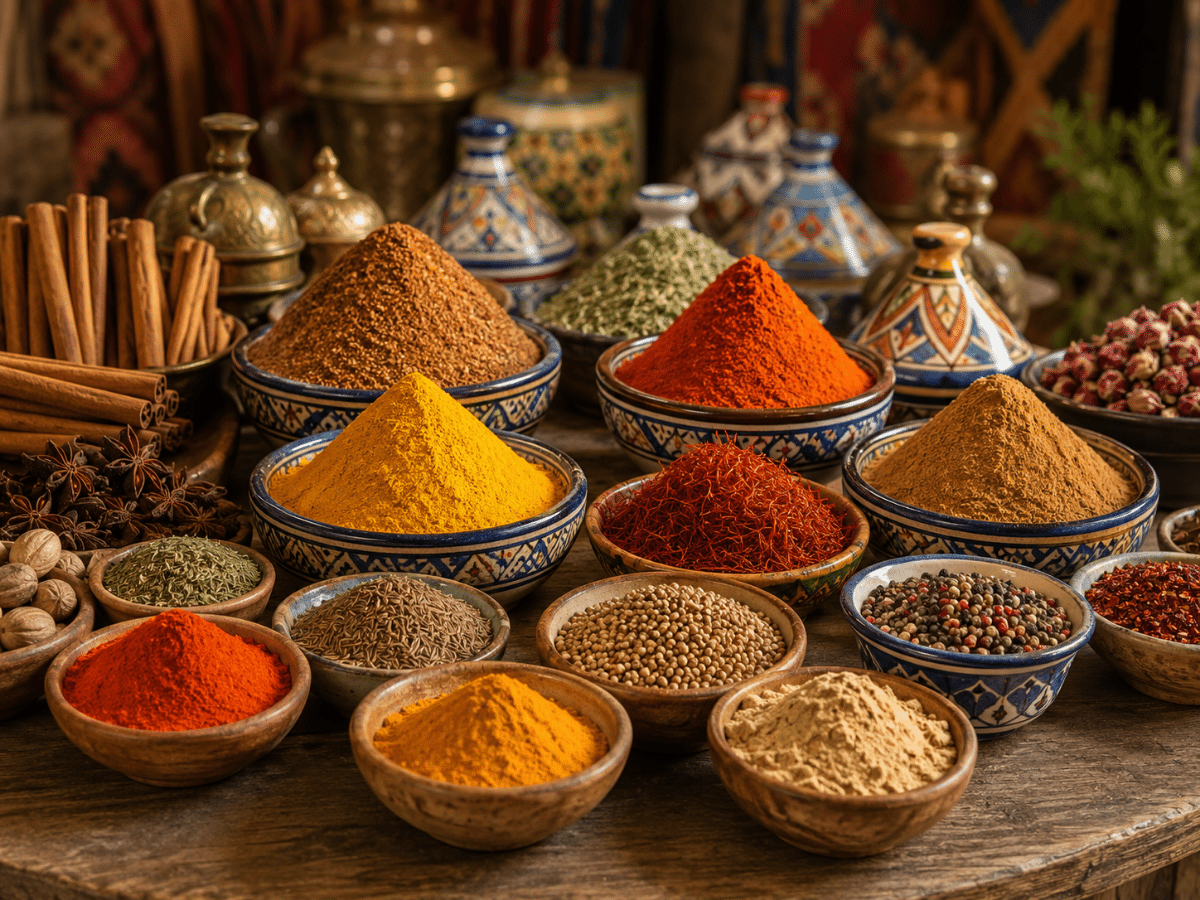
Moroccan Cooking Spices | Essential Flavors of Morocco
Discover the Essential Spices That Give Moroccan Food Its Famous Flavor
Moroccan cooking spices are at the heart of Morocco’s rich and diverse cuisine. From aromatic tagines and slow-cooked couscous to flavorful soups and grilled meats, spices create the warm, colorful, and unforgettable tastes that make Moroccan food popular around the world.
During a journey through Morocco, travelers can discover the aromas of traditional spice markets, learn about local ingredients, and enjoy authentic dishes prepared from recipes that families pass down through generations. Moreover, exploring Moroccan spices offers an excellent way to understand the country’s culture, history, and culinary traditions.
The Most Popular Moroccan Cooking Spices
Moroccan cuisine uses a wide variety of spices. However, the exact combination often changes from one region, family, or recipe to another.
Some of the most common Moroccan cooking spices include:
- Cumin – Moroccan cooks use it in tagines, grilled meats, salads, and vegetable dishes.
- Paprika – It adds color and a mild, smoky flavor to many Moroccan recipes.
- Turmeric – It gives food a beautiful golden color and a warm taste.
- Ginger – Cooks commonly add it to chicken, meat, and traditional tagine dishes.
- Cinnamon – It brings a distinctive flavor to both sweet and savory Moroccan recipes.
- Black pepper – It adds depth and gentle heat to many dishes.
- Saffron – Chefs value this precious spice for its distinctive aroma and rich color.
- Coriander – Cooks add it to soups, sauces, marinades, and traditional dishes.
- Ras el Hanout – This famous Moroccan spice blend combines several aromatic spices.
Ras el Hanout: Morocco’s Famous Spice Blend
Among all Moroccan cooking spices, Ras el Hanout is one of the most famous. Its name is often translated as “top of the shop,” referring to a special blend of premium spices selected by the seller.
Although every recipe differs, Ras el Hanout may contain cumin, cinnamon, turmeric, ginger, coriander, pepper, nutmeg, cardamom, and other spices. Therefore, each spice merchant can create a unique blend, and no two mixtures necessarily taste exactly the same.
Moroccan cooks often add this aromatic mixture to tagines, couscous, roasted vegetables, and meat dishes. As a result, Ras el Hanout has become an important symbol of traditional Moroccan cuisine.
Visit Moroccan Spice Markets
A visit to Morocco gives travelers the opportunity to see Moroccan cooking spices displayed in colorful markets and traditional souks. For example, in cities such as Marrakech and Fes, spice stalls offer fragrant herbs, dried flowers, peppers, and carefully prepared blends.
Furthermore, visiting a local market can become a memorable cultural experience. You can learn how local cooks use different spices, discover new ingredients, and see how Moroccan families continue their food traditions in daily life.
In addition, the colorful displays and rich aromas make Moroccan spice markets especially interesting for travelers who enjoy food and culture.
Experience Moroccan Food During Your Tour
Food plays an important role in traveling through Morocco. With Sahara Family Tours, you can combine cultural experiences, traditional cuisine, local markets, and unforgettable travel adventures across the country.
For instance, you can enjoy a tagine in the Atlas Mountains, taste local dishes in Marrakech, or experience traditional meals during a Sahara Desert tour. In each destination, Moroccan cuisine adds another unforgettable dimension to your journey.
Ultimately, discovering Moroccan cooking spices helps travelers understand much more than food. These flavors connect Morocco’s history, culture, traditions, and hospitality.
Discover Morocco through its flavors, aromas, culture, and traditions with Sahara Family Tours.
📧 Email: saharafamilytours@gmail.com
💬 WhatsApp: Contact us directly using the WhatsApp button on our website.
