
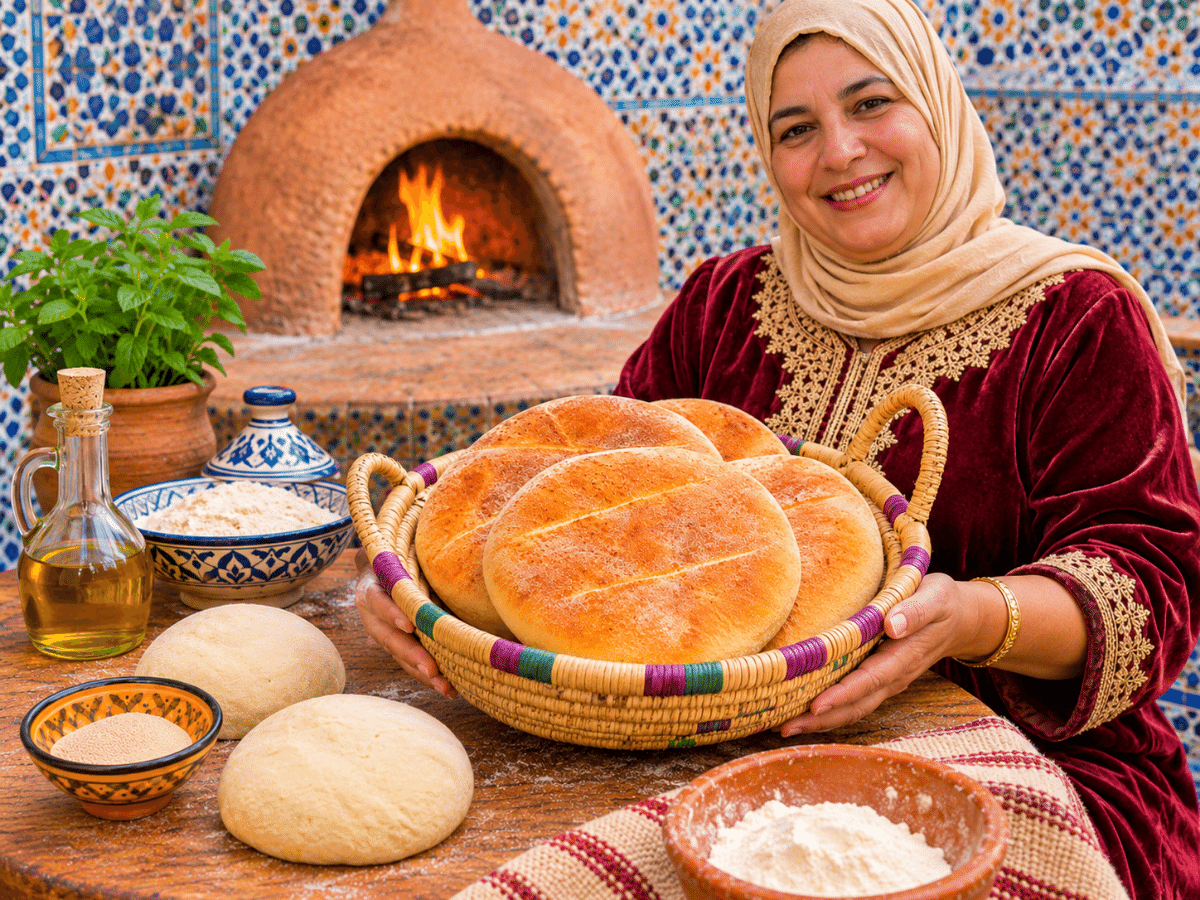
Traditional Moroccan Bread | Authentic Moroccan Food
Discover Morocco’s traditional homemade bread, learn how families prepare Khobz, and explore its importance in Moroccan food culture and everyday life.
Traditional Moroccan bread, locally known as Khobz, is an essential part of Moroccan culture. More than just a basic food, it represents hospitality, family traditions and everyday life.
Whether you visit Marrakech, Fes, Casablanca or a small village in the Atlas Mountains, you will find freshly baked bread served in homes, restaurants and traditional markets.
Moroccan families enjoy Khobz because of its simple ingredients, delicious flavour and soft interior with a slightly crispy crust. Furthermore, many households prepare their bread at home before taking it to traditional communal ovens.
For visitors travelling with Sahara Family Tours, tasting freshly baked bread is a wonderful way to discover authentic Moroccan culinary traditions.
What Is Traditional Moroccan Bread?
Moroccan Khobz is a round, slightly thick homemade bread traditionally prepared with flour, water, yeast and salt.
Depending on regional traditions and family recipes, people use several types of flour, including:
- White wheat flour.
- Whole wheat flour.
- Barley flour.
- Semolina.
- A mixture of different flours.
In most Moroccan households, families enjoy fresh bread every day. Indeed, they commonly serve it at breakfast, lunch and dinner.
Moreover, its round shape and soft texture make Khobz perfect for sharing and enjoying traditional Moroccan dishes.
How Do Moroccans Make Traditional Bread?
Moroccan families have passed down their bread-making traditions through generations. Although recipes vary between households, the preparation generally follows five simple steps.
Step 1: Prepare the Ingredients
First, combine flour, yeast, salt and warm water in a large bowl. Then, mix everything until you form a soft dough.
Step 2: Knead the Dough
Next, knead the dough until it becomes smooth and elastic. This process is important because it helps develop the traditional bread texture.
Step 3: Let the Dough Rise
After kneading, cover the dough and leave it in a warm place until it doubles in size.
Step 4: Shape the Bread
Once the dough has risen, divide it into equal portions. Then, shape each portion into a round loaf.
Step 5: Bake Until Golden
Finally, bake the loaves until they develop a golden-brown crust and a fully cooked interior.
In many Moroccan neighbourhoods, families still take their homemade bread to traditional communal ovens called Ferrane. As a result, these ovens continue to play an important role in local community life.
Different Types of Traditional Moroccan Bread
Morocco has a rich bread-making tradition. Each variety offers different ingredients, textures and preparation methods.
Here are five popular examples:
- Khobz: The traditional round bread served with almost every meal.
- Batbout: A soft, round bread cooked in a pan and often filled with savoury ingredients.
- Msemen: A square, layered Moroccan flatbread commonly enjoyed for breakfast.
- Harcha: A semolina-based bread with a slightly crumbly texture, often served with honey or butter.
- Barley Bread: A traditional variety made with barley flour, particularly popular in some rural communities.
Furthermore, many Moroccan families have their own recipes. Consequently, the country’s bread traditions remain wonderfully diverse.
What Do Moroccans Eat With Traditional Bread?
Moroccan bread is an essential part of the country’s traditional cuisine. Instead of always using forks and spoons, many people use small pieces of bread to enjoy their meals.
For example, families commonly serve Khobz with:
- Moroccan chicken tagine with preserved lemons.
- Lamb and vegetable tagine.
- Beef and prune tagine.
- Harira, the famous Moroccan soup.
- Bissara, a traditional broad bean or split pea soup.
- Moroccan salads and cooked vegetables.
- Olive oil, honey and traditional butter.
Additionally, bread accompanies many family meals during Ramadan, especially when served alongside Harira.
Therefore, sharing a traditional Moroccan meal gives visitors a wonderful opportunity to experience authentic local food culture.
Where Can You Experience Traditional Moroccan Bread?
One of the best ways to discover authentic Moroccan bread is to visit a traditional neighbourhood bakery or communal oven.
Across Morocco, local bakeries and family-run establishments prepare fresh bread every day. Moreover, different destinations offer unique opportunities to explore Moroccan food traditions.
Marrakech
Explore the traditional bakeries of the historic Medina and discover the everyday food culture of the Red City.
Fes
Discover the culinary traditions of the ancient Medina, where traditional dishes and bread-making remain important parts of local life.
Chefchaouen
Enjoy homemade bread in traditional restaurants and family-run cafés while exploring the beautiful Blue City.
Atlas Mountains
Experience rural Moroccan hospitality and enjoy homemade bread alongside traditional village meals.
Sahara Desert
Discover the warmth of Moroccan hospitality while enjoying freshly prepared bread with traditional meals in the desert region.
Why Is Bread Important in Moroccan Culture?
Bread holds a special place in Moroccan hospitality and family traditions. In many Moroccan homes, sharing bread represents generosity and a warm welcome.
Furthermore, families often prepare fresh bread daily and pass their favourite recipes from parents to children.
Another important tradition involves respecting bread and avoiding food waste. Indeed, many Moroccans consider bread too valuable to throw away carelessly.
For international travellers, understanding these small cultural details provides a deeper appreciation of Moroccan traditions.
Discover Moroccan Food During Your Morocco Tour
Travelling through Morocco is not only about discovering beautiful landscapes, historic cities and the Sahara Desert. It is also an opportunity to experience local food, traditional markets and authentic cultural activities.
With Sahara Family Tours, you can explore Morocco through private tours and memorable cultural experiences.
During your journey, you can:
- Taste traditional Moroccan dishes.
- Visit local markets and traditional bakeries.
- Discover the food culture of Marrakech and Fes.
- Explore the Atlas Mountains and traditional villages.
- Enjoy authentic Moroccan meals during your Sahara Desert adventure.
For example, whether you travel from Marrakech to Merzouga, explore the Atlas Mountains or visit Morocco’s imperial cities, traditional food will make your journey even more memorable.
Frequently Asked Questions About Traditional Moroccan Bread
What is Moroccan bread called?
Traditional Moroccan bread is called Khobz. It is usually round and made with wheat flour, water, yeast and salt.
Do Moroccans eat bread every day?
Yes. Bread is a staple food in Morocco. Therefore, families commonly serve it at breakfast, lunch and dinner.
What do Moroccans eat with bread?
Moroccans enjoy bread with tagines, soups, salads, olive oil, honey and many other traditional dishes.
What is a traditional Moroccan communal oven called?
It is commonly called a Ferrane. Families take their homemade bread there to bake in a traditional communal oven.
What is the difference between Khobz and Msemen?
Khobz is a round everyday bread, whereas Msemen is a square, layered flatbread traditionally cooked on a hot pan.
Can tourists try traditional Moroccan bread?
Absolutely! Visitors can enjoy Moroccan bread in restaurants, local bakeries, markets and traditional family homes.
Is Moroccan bread healthy?
Traditional Moroccan bread provides carbohydrates and energy. However, its nutritional value depends on the flour and preparation method. Generally, whole wheat and barley varieties contain more fibre than bread made entirely with refined white flour.
Discover the Real Taste of Morocco with Sahara Family Tours
Moroccan bread is much more than traditional food. It represents the country’s history, hospitality and everyday culture.
From freshly baked Khobz in Marrakech to homemade bread in the Atlas Mountains and traditional meals in the Sahara Desert, every region offers a memorable culinary experience.
Come and discover Morocco with Sahara Family Tours!
📧 Email: saharafamilytours@gmail.com
💬 WhatsApp: Contact us directly using the WhatsApp button on our website.
