
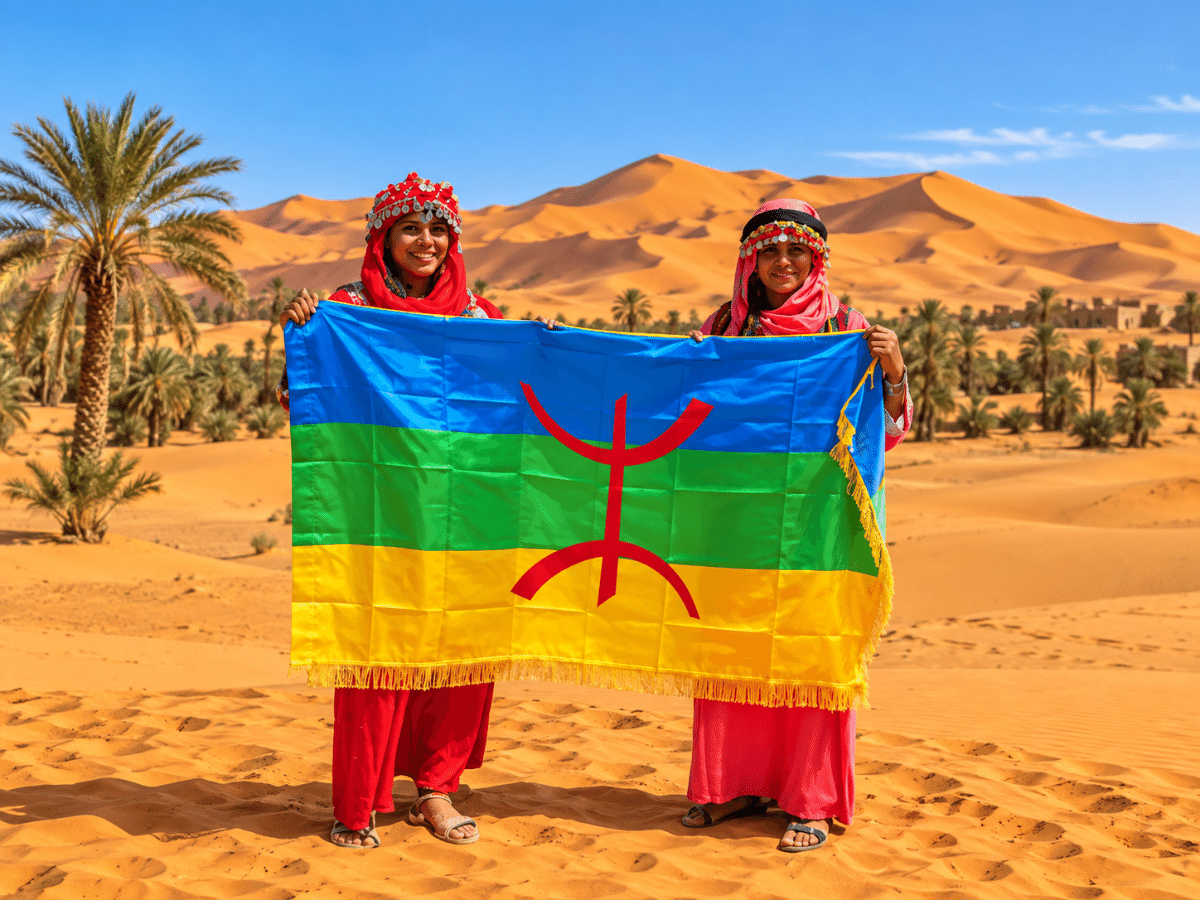
Amazigh Flag | Meaning, Colors, and Berber Heritage in Morocco
Discover the Amazigh Flag: Symbol of Identity, Freedom, and North African Culture
The Amazigh flag represents the identity, history, and cultural heritage of the Amazigh people of North Africa. It is also widely known as the Berber flag. Today, it celebrates a rich cultural tradition that continues to influence Morocco’s languages, customs, art, and everyday life.
At Sahara Family Tours, we believe that discovering Morocco means learning about the people, traditions, and history that make the country unique. Therefore, understanding the Amazigh flag is a meaningful way to begin exploring Morocco’s cultural heritage.
Whether you are planning a family holiday or a Sahara Desert adventure, this iconic flag offers a fascinating introduction to North African culture.
What Is This Cultural Symbol?
The Amazigh flag is a widely recognized symbol of Amazigh identity and unity. The Amazigh people, also known as Berbers, are Indigenous to North Africa, including Morocco, Algeria, Tunisia, and Libya.
The flag features three horizontal stripes in blue, green, and yellow, together with a red symbol in the center. This symbol is the letter ⵣ, known as Yaz in the Tifinagh writing system. It is widely associated with the idea of a free person.
Today, Amazigh communities display the flag at cultural festivals, public gatherings, and celebrations. In this way, it helps promote Amazigh languages, heritage, and identity across North Africa.
What Do the Colors of the Amazigh Flag Mean?
Each color commonly represents an aspect of North Africa’s geography. Together, the colors celebrate the relationship between Amazigh communities and their ancestral lands.
However, interpretations can vary among communities and sources. Therefore, these meanings should be understood as common interpretations rather than a universally fixed explanation.
Blue: The Sea and Sky
The blue stripe is commonly associated with the sea and sky, including the Mediterranean Sea and the Atlantic Ocean. These natural elements have influenced North African communities, trade, and ways of life for generations.
Furthermore, the color highlights the connection between Amazigh heritage and the wider landscapes of North Africa.
Green: The Land and Nature
The green stripe commonly represents the land, including fertile valleys, mountains, forests, and agricultural areas. For centuries, these environments have supported Amazigh communities and their traditional livelihoods.
As a result, green reflects the importance of nature, agriculture, and the land in many local traditions.
Yellow: The Sahara Desert
The yellow stripe is commonly associated with the Sahara Desert and its golden landscapes. Historically, desert routes connected communities and encouraged travel, trade, and cultural exchange.
Consequently, the color evokes the vast landscapes of southern Morocco and other Saharan regions.
Red Yaz: Freedom and Amazigh Identity
The red symbol in the center of the flag is ⵣ, the letter Yaz in the Tifinagh writing system. It is widely associated with a free person and is an important expression of Amazigh identity.
In addition, the symbol represents cultural pride, dignity, and continuity between generations.
Who Are the Amazigh People of Morocco?
The Amazigh people are an essential part of Morocco’s history and cultural identity. Their languages, traditions, architecture, music, and craftsmanship have helped shape Moroccan culture for centuries.
Amazigh communities live throughout Morocco, including the High Atlas, Middle Atlas, Rif Mountains, and southeastern regions near the Sahara. Nevertheless, traditions differ from one region to another, making Amazigh culture remarkably diverse.
Visitors can discover this heritage through traditional music, handmade carpets, textiles, cuisine, festivals, and distinctive architecture. Moreover, these experiences reveal the knowledge and skills that communities continue to pass between generations.
Morocco recognizes Tamazight as an official language alongside Arabic. Consequently, Amazigh heritage remains an important part of the country’s cultural and national life.
Where Can You Experience Amazigh Culture in Morocco?
Traveling through Morocco provides many opportunities to discover Amazigh traditions. From mountain villages to desert settlements, each destination reveals a different aspect of the country’s heritage.
The High Atlas Mountains
The High Atlas Mountains offer opportunities to explore Amazigh heritage, visit traditional villages and markets, admire spectacular scenery, and learn about rural life.
Furthermore, a knowledgeable local guide can explain regional customs, architecture, and everyday traditions. By listening to local perspectives, visitors can develop a deeper understanding of the communities they encounter.
The Middle Atlas Mountains
The Middle Atlas features cedar forests, mountain landscapes, traditional settlements, and distinctive local traditions. As you explore the region, you can learn more about Amazigh customs and lifestyles.
In addition, the area is ideal for travelers who enjoy walking, photography, and cultural exploration. Local markets and village visits can make these experiences even more rewarding.
Merzouga and the Sahara Desert
Merzouga is famous for the impressive Erg Chebbi dunes and unforgettable desert experiences. However, the surrounding region offers much more than beautiful scenery.
Visitors can discover local traditions, enjoy music, and experience desert hospitality. For example, a private Sahara Desert tour can combine scenic drives, cultural encounters, and time to appreciate the region’s landscapes and history.
For families and couples, Merzouga offers a memorable way to experience southern Morocco. Nevertheless, it is important to choose experiences that respect local customs and the people who share their heritage.
The Dades Valley and Todra Gorges
The Dades Valley and Todra Gorges combine dramatic scenery, traditional settlements, and distinctive architecture. Along the way, travelers can visit local villages and learn about the region’s cultural heritage.
Moreover, these destinations provide excellent opportunities for photography, scenic walks, and conversations with knowledgeable local guides.
Traditional Markets and Cultural Festivals
Traditional markets and cultural festivals showcase local clothing, crafts, music, and regional food. They also offer opportunities to learn about skills and artistic traditions passed between generations.
Whenever possible, choose respectful experiences led by knowledgeable local guides. Additionally, ask permission before photographing people and, when practical, purchase handmade products directly from local artisans.
Why Is the Amazigh Flag Important Today?
The Amazigh flag represents much more than three colors and a central symbol. Instead, it celebrates cultural pride, shared heritage, and Amazigh identity throughout North Africa.
For travelers, the flag also provides a starting point for understanding Morocco’s cultural diversity. As a result, visitors can better appreciate the communities, languages, and traditions they encounter during their journey.
By learning about the Amazigh flag, travelers can approach cultural experiences with greater curiosity and respect. Ultimately, understanding local heritage helps make a trip to Morocco more meaningful.
Frequently Asked Questions About the Amazigh Flag
What Does the Amazigh Flag Represent?
The Amazigh flag represents identity, unity, and cultural heritage across North Africa. It features blue, green, and yellow stripes, together with the red Yaz symbol in the center.
What Does the Symbol ⵣ Mean?
The symbol ⵣ, called Yaz, belongs to the Tifinagh writing system. It is associated with a free person and serves as an important symbol of Amazigh identity.
Is the Amazigh Flag the Same as the Moroccan Flag?
No, the two flags have different meanings. The Amazigh flag represents Indigenous Amazigh people and their heritage. In contrast, Morocco’s national flag features a red background with a green five-pointed star.
Where Can I Learn About Amazigh Culture in Morocco?
You can explore Amazigh heritage in the Atlas Mountains, traditional villages, local markets, cultural festivals, and Saharan regions. In addition, knowledgeable local guides can explain regional customs, architecture, and traditions.
Are the Amazigh People the Same as the Berbers?
Both terms broadly refer to Indigenous peoples of North Africa. However, many people prefer the term Amazigh, while Berber remains common in travel literature and historical references. Therefore, using the terminology preferred by the people and communities you meet is a respectful approach.
Discover Amazigh Heritage with Sahara Family Tours
At Sahara Family Tours, we help travelers discover Morocco through private tours, family adventures, desert excursions, and cultural experiences.
From the High Atlas Mountains to the golden dunes of Merzouga, our journeys combine Morocco’s spectacular landscapes with opportunities to discover its cultural heritage. Along the way, travelers can learn about regional traditions through personalized experiences.
Whether you are traveling with children, exploring Morocco as a couple, or planning a private Sahara Desert adventure, we can create an itinerary that matches your interests.
Plan your Morocco cultural adventure with Sahara Family Tours.
📧 Email: saharafamilytours@gmail.com
💬 WhatsApp: Contact us directly using the WhatsApp button on our website for a quick response.
