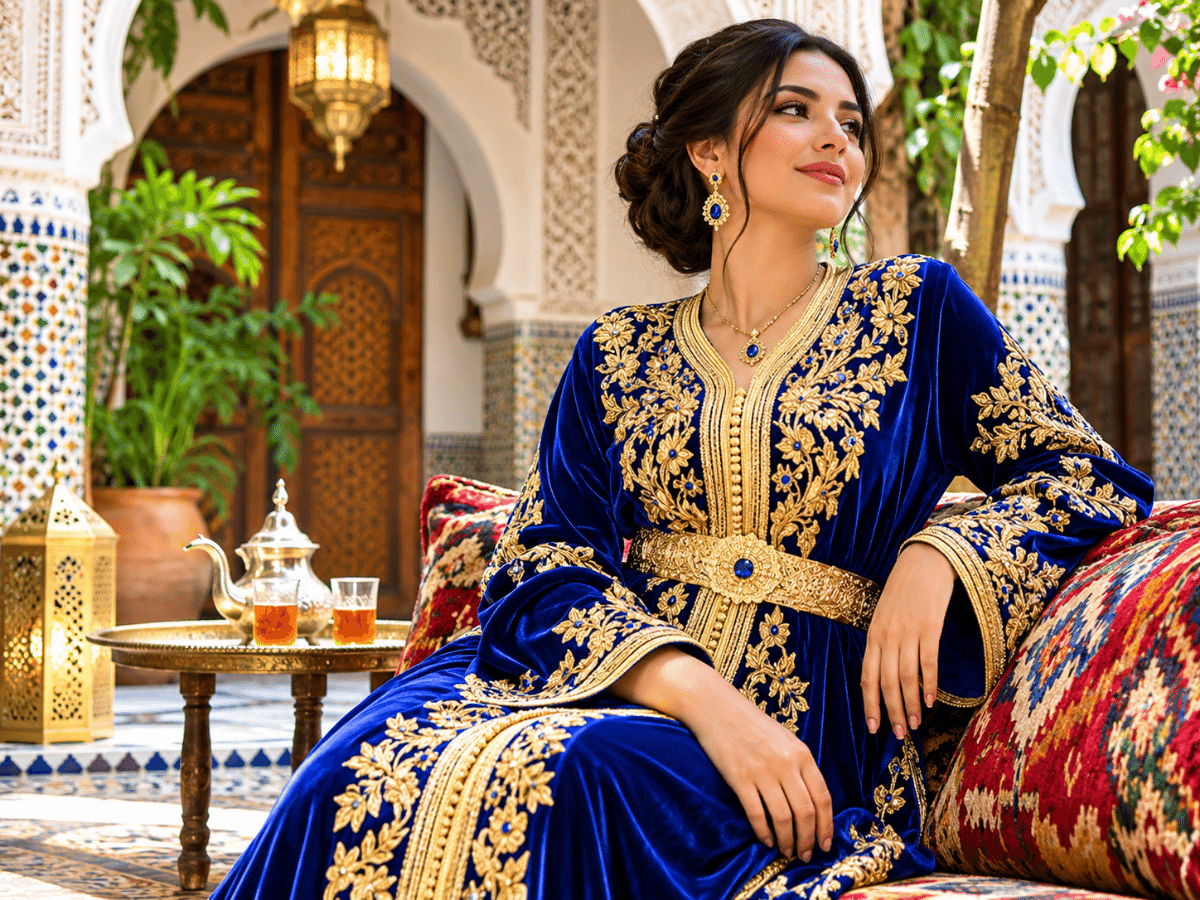
A Symbol of Moroccan Elegance and Tradition
The Caftan Marocain is one of the most recognisable symbols of Moroccan culture. Above all, its elegant designs, detailed embroidery and beautiful fabrics reflect generations of craftsmanship and artistic creativity.For visitors exploring Morocco, the Moroccan caftan offers a wonderful way to experience local traditions and fashion. For example, the colourful souks of Marrakech and the artisan workshops of Fez provide a glimpse into the country’s rich cultural identity. In addition, these places let visitors see how local artisans preserve traditional skills.In 2025, UNESCO added the Moroccan caftan to its Representative List of the Intangible Cultural Heritage of Humanity. As a result, this recognition celebrates the skills and traditions that Moroccan artisans continue to practise and pass on.
The History of the Moroccan Caftan
To begin with, the Moroccan caftan has a long history shaped by different cultural influences and artistic traditions. Over generations, Moroccan artisans have developed distinctive styles and refined traditional techniques and decorative details. In this way, the garment reflects a rich mix of artistic influences.Today, the caftan remains an important part of Moroccan celebrations, weddings and special occasions. Many families also value the caftan as part of their traditions. Its designs showcase regional creativity and family heritage. Furthermore, artisans continue to pass their skills from one generation to another.
What Makes the Moroccan Caftan Special?
One reason the Moroccan caftan stands out is its craftsmanship. Skilled artisans create each decorative detail with care, giving every garment its own distinctive appearance. Moreover, their work helps keep traditional techniques alive.For instance, many caftans feature these traditional elements:
- Beautiful Embroidery: For example, decorative patterns add detail and elegance.
- Luxury Fabrics: In addition, artisans use materials such as velvet, silk, satin and brocade.
- Traditional Belts: Meanwhile, decorative belts, often called Mdamma, complete the outfit.
- Sfifa and Aakad: These traditional braided trims and handmade fabric buttons add distinctive finishing touches.
- Elegant Colours: As for colours, popular choices include royal blue, emerald green, burgundy, ivory and gold.
Together, these elements combine traditional techniques with individual creativity. As a result, each caftan can express a unique character and style.
Different Types of Moroccan Caftans
Morocco offers a variety of caftan styles, ranging from traditional designs to contemporary creations. To explore this variety, consider three popular examples.
Traditional Moroccan Caftan
First, the traditional Moroccan caftan features a long shape, elegant sleeves and decorative details. For this reason, women commonly choose this style for weddings, family celebrations and other important occasions.
Modern Moroccan Caftan
On the other hand, modern designers combine traditional craftsmanship with contemporary cuts, fabrics and colours. Therefore, these caftans offer a fresh interpretation of Moroccan fashion while preserving many classic details.
Moroccan Wedding Caftan
Wedding caftans often feature some of the most elaborate designs, especially for special celebrations. For example, they may include rich fabrics, detailed embroidery and decorative belts. In addition, they form an important part of the clothing traditions surrounding Moroccan wedding celebrations.
Where to Discover Traditional Moroccan Caftans
When you visit
Morocco, explore traditional clothing shops and artisan workshops. In this way, you can enjoy a memorable experience while learning about local fashion and craftsmanship.
Marrakech
To start your visit, the souks of Marrakech offer many opportunities to discover traditional clothing, fabrics, embroidery and handmade accessories. Furthermore, visitors can browse shops that showcase contemporary interpretations of Moroccan fashion. As you explore, you may also find pieces made by local craftspeople.
Fez
Similarly, Fez has a long-standing reputation for craftsmanship and traditional artisan work. While exploring the city, visitors can learn more about Moroccan textile traditions and decorative techniques. In particular, the city’s historic workshops offer insight into these skills.
Casablanca
Casablanca offers a diverse fashion scene that brings traditional Moroccan clothing together with modern designs. Consequently, visitors can discover different interpretations of the caftan in the city’s shops and fashion boutiques.
The Moroccan Caftan and Cultural Celebrations
The caftan plays an important role in Moroccan social and family traditions. In particular, people associate it with weddings, religious festivities and special celebrations.For instance, at Moroccan weddings, brides may wear several traditional outfits throughout the celebration. Meanwhile, guests often choose elegant caftans for these memorable occasions.Beyond fashion, the caftan represents cultural identity, family heritage and the creativity of generations of Moroccan artisans. Moreover, its production supports the people who weave fabrics, tailor garments and create embroidery and decorative details.
Experience Moroccan Culture with Sahara Family Tours
Discovering Morocco means much more than visiting famous monuments and beautiful landscapes. Instead, you can experience local traditions, meet artisans and explore historic markets.For a more personal experience, you can explore Morocco with
Sahara Family Tours through private, personalised journeys for couples, families and small groups. Along the way, you can discover the country’s culture at a comfortable pace.During visits to Marrakech, Fez, Casablanca and other destinations, you can explore traditional markets, admire Moroccan architecture and discover local craftsmanship. In addition, you can learn about the local crafts that give each city its character.Whether you enjoy Moroccan fashion, traditional food, historic medinas or Sahara Desert adventures, Morocco offers memorable experiences for every traveller. Whatever your interests, you can find something distinctive to enjoy.Finally, plan your private Morocco holiday with Sahara Family Tours and discover the country’s culture, traditions and beauty.
Frequently Asked Questions About the Moroccan Caftan
What is a Moroccan caftan?
In simple terms, a Moroccan caftan is a traditional long garment with an elegant design, decorative details, embroidery and a variety of fabrics.
When do Moroccan women wear caftans?
In general, women wear caftans at weddings, family celebrations, religious festivities and other special occasions. In addition, they choose different styles to suit each event.
Where can I buy a traditional Moroccan caftan?
Fortunately, you can find Moroccan caftans in traditional clothing shops, artisan workshops and markets in cities such as Marrakech, Fez and Casablanca. Before you buy, however, compare the fabrics and craftsmanship.
What is the difference between a traditional and modern Moroccan caftan?
Traditional designs usually preserve classic shapes and decorative techniques. By contrast, modern versions introduce contemporary cuts, fabrics and fashion details.
Is the Moroccan caftan recognised by UNESCO?
Yes. In 2025, UNESCO added the Moroccan caftan to its Representative List of the Intangible Cultural Heritage of Humanity.
Plan Your Morocco Experience
Discover Morocco’s beauty and traditions with
Sahara Family Tours. If you would like to plan a private journey, contact our team for more information.📧 Email: saharafamilytours@gmail.com
💬 WhatsApp: Contact us directly using the WhatsApp button on our website for a quick response.