
Fes Tanneries | Chouara Tannery & Leather Guide
Discover the Historic Leather Tanneries of Fes
The Fes tanneries rank among the most fascinating places to visit in Morocco. Located in the ancient medina of Fes, these historic leather workshops offer a unique look at traditional craftsmanship that local artisans have practiced for centuries. For travelers interested in Moroccan culture, history, and local traditions, the tanneries provide an unforgettable experience.
Fes is famous for its beautiful architecture, narrow streets, traditional souks, and rich heritage. However, the historic tanneries offer a different perspective on everyday life in the city. Here, skilled craftsmen continue to use traditional methods to clean, dye, dry, and prepare leather.
What Are the Fes Tanneries?
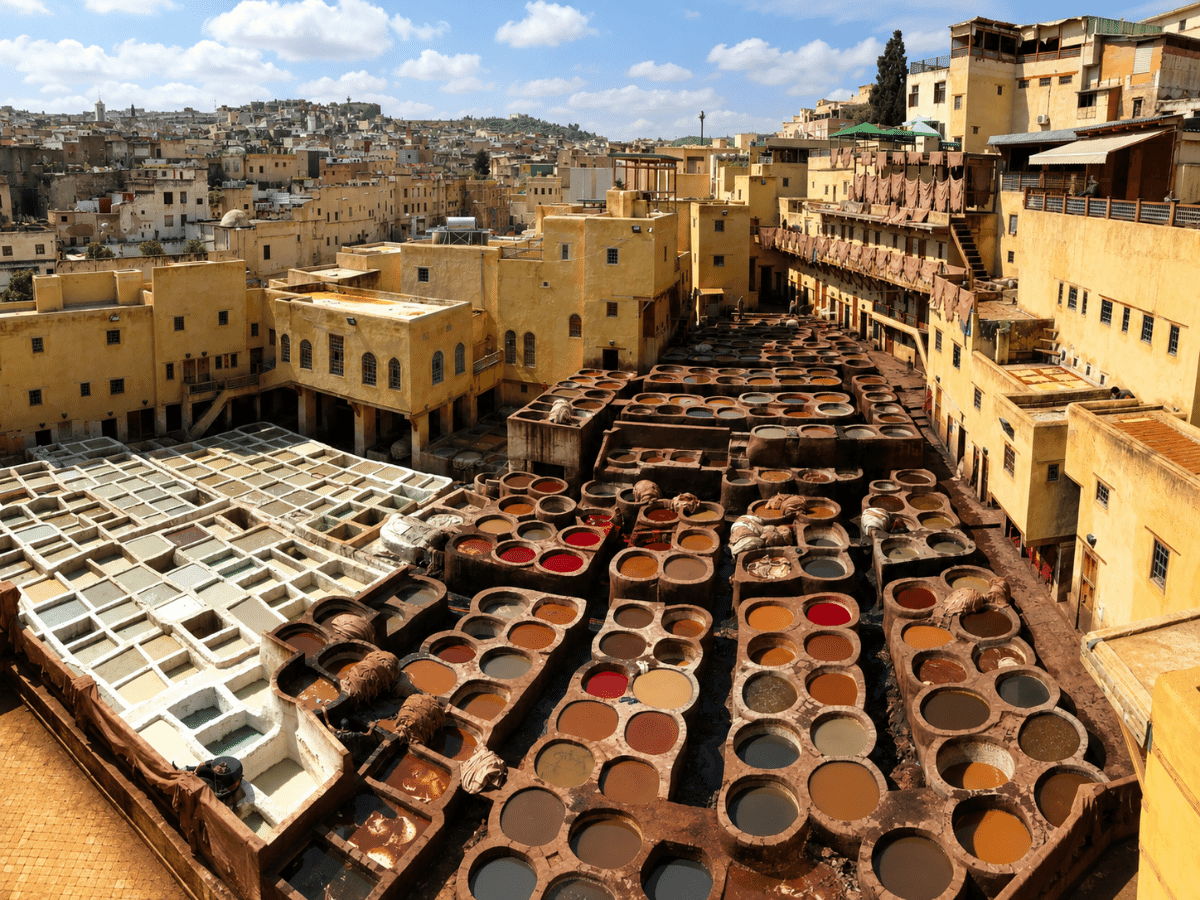
The Fes tanneries are traditional leather-making workshops within the old medina. Chouara Tannery remains the most famous, featuring large stone dyeing vats filled with colorful natural dyes.
Leather production in Fes follows traditional techniques. First, workers clean and prepare animal hides. Then, they treat the hides before placing them in dyeing vats. Finally, workers dry the leather and prepare it for products such as bags, shoes, belts, jackets, and traditional Moroccan slippers.
As a result, the tanneries remain an important part of Fes’s cultural and artisanal heritage.
Chouara Tannery: The Most Famous Tannery in Fes
When visiting Fes, Chouara Tannery is usually the main tannery travelers want to see. You can find it in the Fes el-Bali medina, where visitors can view it from nearby terraces and leather shops.
From an elevated viewpoint, visitors can see rows of large stone vats containing different colored dyes. The colorful scene looks especially impressive from above.
However, the smell around the tanneries can be strong. Leather workers traditionally use natural materials during the tanning process, so visitors should prepare for distinctive odors.
What Can You See at the Fes Tanneries?
A visit to the tanneries can help you understand how Moroccan artisans produce traditional leather.
You may see:
- Traditional stone dyeing vats
- Workers preparing and treating animal hides
- Leather drying in the sun
- Natural dyeing techniques
- Handmade Moroccan leather products
- Traditional workshops and artisan stores
In addition, visiting a leather workshop gives you an opportunity to see how local artisans transform raw materials into finished products.
Best Time to Visit the Fes Tanneries
The best time to explore the Fes tanneries is generally in the morning or later in the afternoon. During these periods, temperatures often feel more comfortable for walking around the medina.
Spring and autumn offer particularly pleasant conditions for exploring Fes. Summer can become hot, especially when you walk through the narrow streets of the old city. Therefore, we recommend comfortable clothing, walking shoes, water, and sun protection.
Travel Tips for Visiting the Tanneries in Fes
Before visiting the tanneries, keep a few practical tips in mind.
Wear Comfortable Shoes
The Fes medina has narrow streets and uneven surfaces. Comfortable walking shoes will make your visit much easier.
Be Prepared for Strong Smells
The traditional tanning process can produce a powerful smell. Some shops may offer fresh mint to help visitors manage the odor.
Respect Local Artisans
The tanneries are working environments, not simply tourist attractions. Therefore, avoid interfering with workers and always ask before taking close-up photographs of people.
Be Careful When Shopping
Leather shops around the tanneries offer many products. If you want to buy something, compare quality and prices before making a decision.
Consider a Local Guide
The Fes medina can confuse first-time visitors. A knowledgeable local guide can explain the history of the tanneries and help you navigate the narrow streets.
How to Visit the Fes Tanneries
The tanneries sit inside the historic medina, where cars cannot easily access many areas. Consequently, visitors should expect to walk through narrow streets and busy souks.
A private Morocco tour can make the experience more comfortable, especially for families and first-time visitors. A local guide can also combine the tanneries with other important attractions in Fes.
You can include the tanneries in a wider Fes itinerary featuring the old medina, historic gates, traditional souks, artisan workshops, and other cultural landmarks.
Fes Tanneries for Families
Families can visit the tanneries, although parents should consider the strong smell, busy streets, and amount of walking involved. Younger children may find the colorful dyeing vats interesting, while older children can learn about traditional Moroccan craftsmanship.
For a more relaxed family experience, plan the visit at a comfortable time of day and allow breaks between attractions.
Why Visit the Fes Tanneries?
The Fes tanneries offer much more than a colorful photo opportunity. They represent an important part of Morocco’s traditional craft heritage.
A visit allows you to see centuries-old leatherworking techniques while discovering another side of Fes beyond its famous monuments. Moreover, the experience connects travelers with local artisans and the city’s long-standing tradition of handmade craftsmanship.
Explore Fes with Sahara Family Tours
Fes is one of Morocco’s most rewarding destinations for travelers who want to experience history, culture, food, architecture, and traditional crafts.
At Sahara Family Tours, we can help you discover Fes as part of a private and customized Morocco itinerary. Whether you travel as a family, couple, group, or solo traveler, we can adapt your itinerary to your interests and schedule.
From the historic medina and Fes tanneries to the Atlas Mountains and the Sahara Desert, Morocco offers countless opportunities for memorable travel experiences.
Plan Your Morocco Journey
Ready to discover Fes and the traditional tanneries?
📧 Email: saharafamilytours@gmail.com
💬 WhatsApp: Contact us directly using the WhatsApp button on our website.
