
Morocco Currency | Money, ATMs & Payment Tips
Your Complete Guide to Money and Payments in Morocco
Planning a trip to Morocco and wondering about the Morocco currency, cash, ATMs, or credit cards? Understanding how money works in Morocco can make your journey much easier.
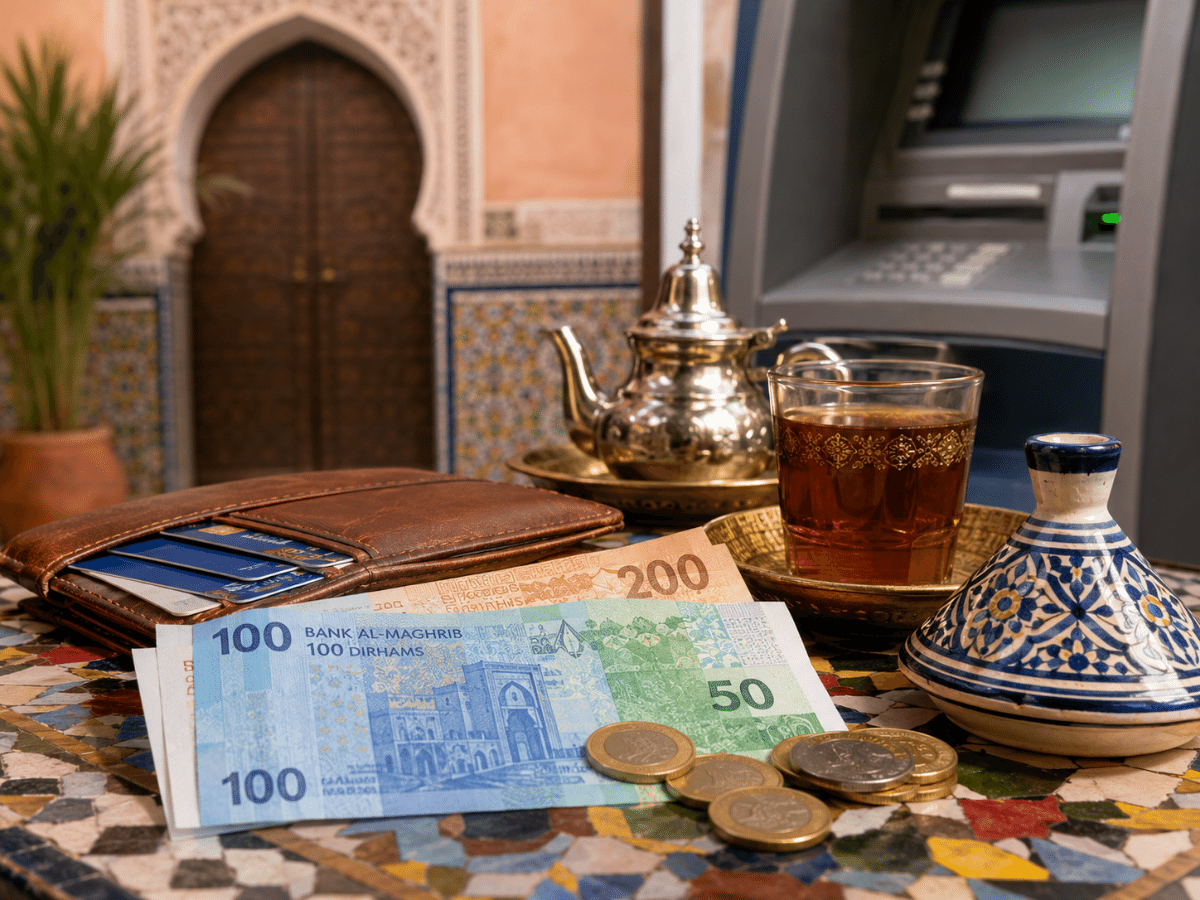
The official currency of Morocco is the Moroccan dirham, abbreviated as MAD and commonly written as DH or Dhs. You will use Moroccan dirhams for everyday purchases, including taxis, markets, restaurants, cafés, souvenirs, and smaller shops.
Although credit and debit cards are widely accepted in many tourist businesses, carrying some cash is still important. This is especially true when visiting traditional markets, rural areas, small villages, and parts of the Sahara Desert.
What Currency Is Used in Morocco?
The Moroccan dirham (MAD) is the official currency of Morocco.
Banknotes commonly used include:
- 20 MAD
- 50 MAD
- 100 MAD
- 200 MAD
Coins are also used for smaller purchases. You may see 0.50, 1, 2, 5, and 10 dirham coins, as well as smaller centime coins.
When checking prices, you may see DH, Dhs, or MAD. They all refer to Moroccan dirhams.
Can You Use Euros or US Dollars in Morocco?
Euros and US dollars are not the standard everyday currency in Morocco. Some tourist businesses may accept foreign currency, but you should not rely on it.
For normal purchases, it is better to pay in Moroccan dirhams.
If you bring euros, US dollars, British pounds, or another foreign currency, you can exchange them at authorized exchange offices, banks, airports, some hotels, and other designated locations. The Moroccan National Tourism Office recommends using currency exchange services where available.
Using ATMs in Morocco
ATMs are widely available throughout Morocco, particularly in major cities and tourist destinations. International bank cards can generally be used to withdraw Moroccan dirhams.
You will find ATMs in destinations such as:
- Marrakech
- Casablanca
- Fez
- Rabat
- Tangier
- Chefchaouen
- Ouarzazate
- Errachidia
- Merzouga
However, ATM availability becomes less convenient in remote rural areas and desert regions. If you are traveling toward the Sahara Desert, it is a good idea to withdraw enough Moroccan cash before leaving larger towns.
ATM Tips for Morocco
Before using an ATM, consider these practical tips:
- Use ATMs operated by established banks whenever possible.
- Check your bank’s international withdrawal fees before your trip.
- If the ATM asks whether you want the transaction converted into your home currency, compare the options carefully. Your own bank may offer a different exchange rate.
- Keep some cash with you instead of depending entirely on your card.
- Avoid carrying all your money in one place.
Can You Pay by Card in Morocco?
Yes. Credit and debit cards are accepted in many parts of Morocco, especially in hotels, larger restaurants, shops, petrol stations, and other tourist-oriented businesses. Visa and Mastercard are commonly accepted.
However, card payment is not available everywhere.
You may still need cash for:
- Souks and traditional markets
- Small cafés
- Local taxis
- Small shops
- Tips
- Street food
- Rural villages
- Some excursions
- Small businesses
- Remote desert areas
For this reason, the best approach is usually to carry both a payment card and some Moroccan dirhams.
How Much Cash Should You Carry in Morocco?
There is no single amount that is right for every traveler. Your cash needs depend on your itinerary, accommodation, activities, and travel style.
For example, travelers staying mainly in luxury hotels and eating at larger restaurants may use their cards frequently. Budget travelers visiting markets and using local transportation may need more cash.
If your Morocco itinerary includes Marrakech, the Atlas Mountains, Ouarzazate, and the Sahara Desert, plan ahead and withdraw cash before entering remote areas.
You do not need to carry your entire travel budget in cash. A combination of cards and Moroccan dirhams is generally more practical.
Where Can You Exchange Money in Morocco?
You can exchange foreign currency at authorized exchange offices, banks, airports, and some hotels. Exchange offices are available in many Moroccan cities and tourist areas.
Always check the exchange rate and any applicable fees before completing a transaction.
It is also wise to keep your exchange receipts, particularly if you may need them later.
Morocco Currency Exchange Rates
The value of the Moroccan dirham changes against currencies such as the euro, US dollar, and British pound.
Therefore, avoid relying on an old conversion from a travel blog. Check the current exchange rate shortly before your trip and again during your stay.
As a simple example, exchange rates can make the same amount of euros or dollars worth different amounts of Moroccan dirhams at different times.
Your bank, card provider, ATM operator, or exchange office may also apply its own fees or rates. The Moroccan National Tourism Office notes that card transactions use the current exchange rate, while fees can depend on the card-issuing institution.
Money Tips for Traveling in Morocco
A few simple habits can make managing money easier:
Carry small denominations. Small notes and coins are useful for cafés, taxis, tips, and small purchases.
Keep some emergency cash. Even if you normally pay by card, having Moroccan dirhams is useful when a card machine is unavailable.
Do not exchange all your money at once. Exchange what you reasonably expect to use and keep your options open.
Check your bank fees. International ATM withdrawals and card transactions can involve fees.
Tell your bank about your trip if required. Some banks may block unusual international transactions as a security measure.
Keep cards and cash separately. This gives you a backup if one payment method is lost or unavailable.
Money in the Moroccan Sahara
If your Morocco trip includes a Sahara Desert tour, prepare your money before heading into remote areas.
Merzouga and other desert tourism areas have ATMs and businesses that accept cards, but you should not assume every small business or remote stop will have electronic payment facilities.
For a desert itinerary, it is sensible to have enough Moroccan dirhams for personal expenses, tips, small purchases, and unexpected needs.
At Sahara Family Tours, we can also help travelers understand practical details before their private Morocco tour, including transportation, accommodation, desert activities, and itinerary planning.
Is Morocco Expensive?
Morocco can suit different travel budgets. Your overall spending depends on your accommodation, transportation, restaurants, activities, shopping, and the type of tour you choose.
A private luxury tour will naturally cost more than independent budget travel. Likewise, staying in a traditional riad, eating at local restaurants, and using public transportation can create a different budget from staying in five-star hotels and booking private transfers.
The important thing is to plan your spending around your own travel style.
Frequently Asked Questions About Morocco Currency
What is the currency of Morocco?
The official currency is the Moroccan dirham, abbreviated MAD and commonly written as DH or Dhs.
Can I use my credit card in Morocco?
Yes. International Visa and Mastercard cards are accepted in many hotels, restaurants, shops, and petrol stations. However, cash is still useful, especially in smaller businesses and remote areas.
Are ATMs available in Morocco?
Yes. ATMs are widespread in Moroccan cities and many tourist destinations.
Should I carry cash in Morocco?
Yes. Even if you plan to use a card, carrying some Moroccan dirhams is recommended for small purchases and places that do not accept cards.
Can I pay with euros in Morocco?
Some tourist businesses may accept euros, but the Moroccan dirham is the official currency. For everyday spending, paying in Moroccan dirhams is generally the better option.
Final Morocco Money Tips
Understanding Morocco currency before your trip can save you time and make everyday purchases much easier. Use a combination of cards and cash, withdraw Moroccan dirhams from reliable ATMs, and keep some smaller notes for taxis, markets, tips, and local purchases.
If you are planning a private Morocco tour, especially one that includes the Atlas Mountains or the Sahara Desert, preparing your cash in advance is even more important.
Plan your Morocco adventure with Sahara Family Tours and enjoy your journey with confidence.
📧 Email: saharafamilytours@gmail.com
💬 WhatsApp: Contact us directly using the WhatsApp button on our website.
