
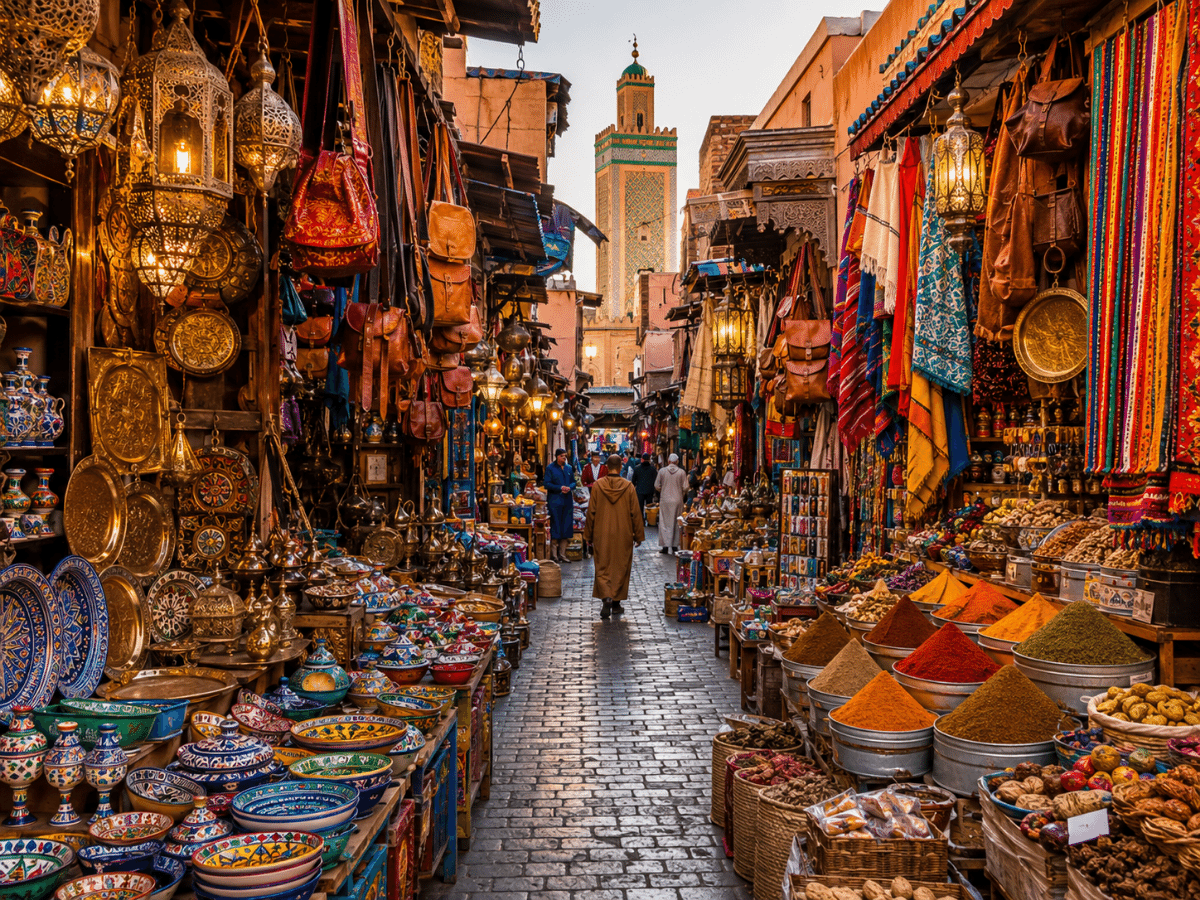
Morocco Markets Guide | Best Souks to Visit
A Practical Guide to Authentic Moroccan Markets, Local Products and Cultural Experiences
Morocco markets offer one of the most rewarding ways to discover Moroccan culture, craftsmanship and everyday life. From the colorful souks of Marrakech and Fes to traditional markets in mountain towns and desert communities, these lively places reveal another side of the country. In addition, travelers can browse handmade crafts, taste regional products, meet artisans and discover souvenirs connected to local traditions.
Why Visit Morocco Markets?
Morocco markets are famous for their atmosphere, variety and traditional craftsmanship. For generations, many souks have served local communities, providing places where residents buy food, clothing, household products and handmade goods. At the same time, historic markets preserve traditional crafts that continue to support local artisans.
Depending on the destination, you may find Moroccan rugs, leather goods, ceramics, lanterns, jewelry, spices, textiles, clothing and decorative products. Because each region has its own styles, materials and specialties, shopping can become an important part of your cultural discovery.
Moreover, Morocco markets offer an experience beyond major monuments. You can watch artisans work, learn how products are made and discover how local traditions continue to influence Moroccan design.
Best Markets in Morocco
Every destination offers a different market experience. While some souks attract many visitors, others remain primarily local shopping areas. Therefore, exploring more than one market can give you a broader understanding of Moroccan life and craftsmanship.
Marrakech Souks
The Marrakech souks are among the best-known Morocco markets. Located throughout the historic Medina near Jemaa el-Fna, they feature narrow lanes filled with shops, workshops and traditional stalls.
You can search for Moroccan carpets, leather slippers, bags, belts, lamps, spices, ceramics, jewelry, clothing and wooden crafts. However, the variety can feel overwhelming, so take your time and compare products before buying.
In addition, a knowledgeable local guide can make the experience easier. A guide can explain the history of the Medina, introduce traditional crafts and help you understand local customs. As a result, you can focus more on enjoying the market and less on navigating its busy lanes.
Fes Medina Souks
Fes is renowned for its historic Medina and strong artisan traditions. For this reason, its markets provide an excellent opportunity to explore Moroccan craftsmanship.
Fes is particularly famous for leatherwork, ceramics, metalwork and textiles. Furthermore, visitors can learn about the traditional leather tanning process and discover workshops where craftspeople continue techniques passed down through generations.
Meknes Market
Meknes offers a more relaxed shopping experience than some larger tourist destinations. In addition, its souks feature pottery, carpets, clothing, olives, spices and handmade gifts.
Because the atmosphere can feel less hectic, Meknes can be a good choice for travelers who want to explore Moroccan markets at a slower pace.
Essaouira Markets
Essaouira provides a relaxed coastal alternative. Within its historic Medina, visitors can explore shops offering handicrafts, artwork, textiles, wood products and locally made souvenirs.
Meanwhile, the city’s coastal atmosphere creates a different experience from the busy inland souks of Marrakech and Fes.
Chefchaouen Market
Chefchaouen is famous for its blue-painted streets, but its local market deserves attention too. In addition to exploring the famous Medina, visitors can find woven textiles, baskets, traditional clothing and regional handmade products.
Rissani Market and Desert Souks
Rissani Market offers an interesting view of traditional trading culture in southeastern Morocco. The market is known for dates, spices, pottery, textiles, regional foods and everyday goods.
Furthermore, travelers heading toward the Sahara can discover smaller markets in towns and villages along the route. These local Morocco markets provide a different perspective from major tourist souks and show how desert communities shop, trade and connect.
What Can You Buy in Moroccan Markets?
Moroccan Rugs
Handmade Moroccan rugs remain popular souvenirs. Designs, colors, patterns and weaving techniques vary between communities and regions.
Before buying a carpet, ask about its origin, materials, technique and craftsmanship. Then, compare several pieces and choose a design that genuinely suits your taste.
Leather Products
Morocco has a long leatherworking tradition. Souks sell bags, belts, wallets, slippers and other handmade products.
Fes and Marrakech are especially recognized for leather craftsmanship. Therefore, both cities are excellent choices for travelers interested in traditional Moroccan leather products.
Moroccan Spices
Spices play an important role in Moroccan cuisine. As you explore local markets, stalls often display cumin, paprika, turmeric, ginger, saffron and other herbs and blends.
However, if you plan to take spices home, check your destination country’s customs regulations before purchasing large quantities.
Moroccan Ceramics
Moroccan ceramics appear throughout the country. Plates, bowls, tagines and decorative pieces often feature geometric designs and colors influenced by regional artistic traditions.
For example, Fes is particularly well known for its distinctive ceramic craftsmanship. Consequently, ceramics can make a meaningful souvenir for travelers interested in Moroccan art.
Moroccan Lanterns
Moroccan lanterns are popular because of their detailed metalwork and distinctive light patterns. Souks often sell metal lanterns, colorful glass lamps and decorative lighting made by local craftspeople.
In addition, these products demonstrate how traditional Moroccan craftsmanship combines practical design with decorative art.
Argan Oil
Argan oil is one of Morocco’s best-known products and comes mainly from southwestern regions. You can find culinary and cosmetic argan oil in markets, specialist shops and cooperatives.
Before purchasing, check the origin and intended use. If possible, buying from a reputable cooperative can also help you learn more about how the product is made.
How to Bargain in Moroccan Markets
Bargaining is common in many Moroccan souks, particularly when shops do not display fixed prices.
First, ask for the price, consider the quality and decide what you are comfortable paying. You can negotiate; however, aggressive bargaining is unnecessary. Remember that handmade products require time, skill and materials.
More importantly, treat bargaining as part of the cultural experience rather than simply a competition to obtain the lowest price. A fair purchase can support artisans and small local businesses.
Practical Tips for Shopping in Morocco Markets
Compare prices: Visit several shops before making an important purchase. This way, you can understand the typical price and compare quality.
Ask questions: Learn about materials, origin, production methods and craftsmanship. In this way, you can make a more informed purchase.
Take your time: Souks are easier to appreciate when you explore without rushing. Therefore, leave enough time in your itinerary for relaxed shopping.
Carry cash: Smaller stalls and local markets may not accept cards. As a result, carrying some Moroccan dirhams can make small purchases easier.
Check quality: Examine leather, textiles, ceramics and handmade products carefully before buying.
Respect local communities: Remember that markets serve residents as well as travelers. Consequently, respectful behavior helps create a better experience for everyone.
Protect your belongings: Crowded areas require sensible attention to bags, phones and valuables.
Consider a local guide: A knowledgeable guide can explain customs, navigate busy lanes and introduce you to trusted artisans. Especially in larger medinas, this can make your visit more comfortable and informative.
When Is the Best Time to Visit Morocco Markets?
You can visit Morocco markets throughout the year. However, the ideal time depends on your destination, itinerary and weather preferences.
Morning visits can be pleasant because markets may feel less crowded and temperatures are often comfortable. Alternatively, late afternoon can create a lively atmosphere, especially when temperatures become cooler.
If you visit Marrakech, Fes or another major destination, consider including the souks within a private Morocco tour. With a flexible itinerary, you can spend more time exploring markets that match your interests instead of rushing from one attraction to another.
Experience Morocco Markets With Sahara Family Tours
At Sahara Family Tours, we believe discovering Morocco means more than visiting famous monuments. Instead, it means meeting local people, learning about traditional crafts and experiencing the country at your own pace.
Our private Morocco tours can include traditional markets, historic medinas, artisan workshops, local cooperatives and cultural experiences. Whether you travel as a family, couple, group or solo traveler, we can help create a personalized itinerary around your interests.
Furthermore, combining Morocco markets with cities, the Atlas Mountains and the Sahara Desert can create a more complete Moroccan travel experience.
Plan Your Morocco Market Experience
A visit to Morocco markets can become one of the most memorable parts of your trip. You can discover handmade crafts, taste regional products, meet artisans and take home meaningful souvenirs while learning more about Moroccan culture.
Ultimately, Morocco markets offer much more than shopping. They provide opportunities to understand local traditions, discover regional craftsmanship and experience everyday Moroccan life.
If you are planning a Morocco vacation and want to include authentic markets, traditional souks and local experiences, contact Sahara Family Tours for personalized planning.
📧 Email: saharafamilytours@gmail.com
💬 WhatsApp: Contact us directly using the WhatsApp button on our website for a quick response.
