
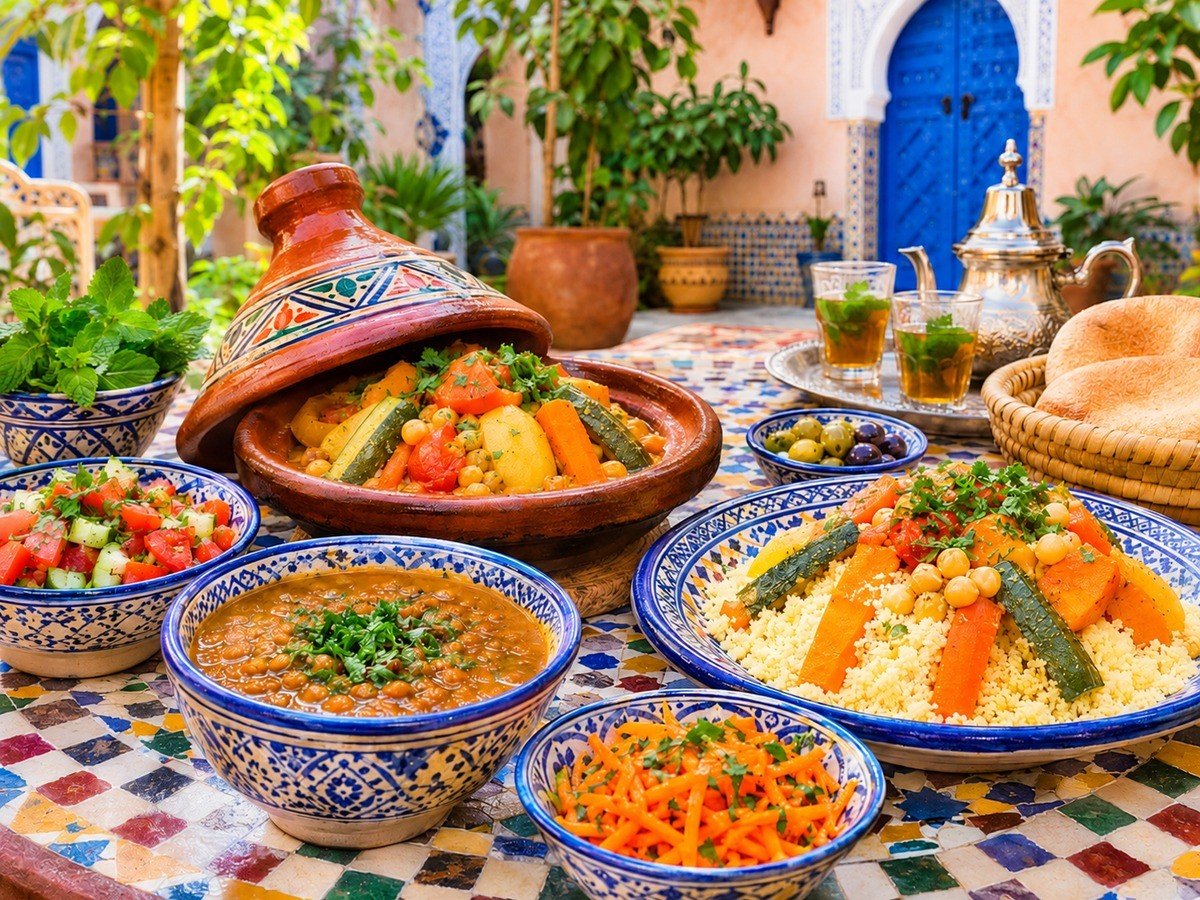
Vegetarian & Vegan Food in Morocco | Food & Travel Guide
Discover flavorful plant-based dishes and practical ways to communicate your dietary needs.
Morocco is famous for its aromatic tagines, traditional couscous and rich culinary heritage. However, Moroccan cuisine offers much more than meat-based dishes. Vegetarian and vegan travellers can discover a wonderful variety of fresh vegetables, legumes, salads, olives, bread, herbs and spices.
Whether you explore the colourful streets of Marrakech, visit the historic medina of Fes or travel through the Atlas Mountains towards the Sahara Desert, you can enjoy many traditional Moroccan flavours without eating meat.
Nevertheless, vegan travellers should pay particular attention to ingredients. Some apparently vegetarian dishes contain butter, eggs, honey, milk or meat stock. Therefore, understanding local ingredients and communicating your dietary requirements will help you enjoy Moroccan food with confidence.
Traditional Moroccan Vegetarian Dishes to Try
Moroccan cooking combines seasonal ingredients and traditional spices to create delicious meals. Fortunately, many traditional recipes feature vegetables and legumes. Here are some popular vegetarian dishes worth trying.
Vegetable Tagine
Vegetable tagine is an excellent choice for vegetarian visitors. Traditionally, Moroccan cooks prepare it in a clay pot using potatoes, carrots, courgettes, tomatoes, pumpkin, peas and seasonal vegetables.
They slowly cook these ingredients with olive oil, ginger, turmeric, cumin and paprika to create a rich, aromatic sauce. As a result, vegetable tagine offers plenty of flavour without requiring meat.
However, if you follow a vegan diet, ask whether the restaurant uses butter or meat stock during preparation.
Moroccan Salads
Traditional Moroccan salads make excellent starters and light meals. For example, popular options include:
- Zaalouk: A cooked aubergine and tomato salad.
- Taktouka: A delicious combination of tomatoes and green peppers.
- Moroccan carrot salad: Prepared with carrots, herbs, spices and olive oil.
- Beetroot salad: Often served with lemon and fresh herbs.
Furthermore, these salads provide an excellent opportunity to discover authentic Moroccan flavours. Nevertheless, some restaurants add eggs or other animal products, so always check the ingredients before ordering.
Lentils, Chickpeas and Moroccan Beans
Legumes play an important role in Moroccan cuisine. Consequently, they provide satisfying and nutritious plant-based meal options.
Moroccan cooks prepare lentils with tomatoes, onions, garlic and spices. Similarly, chickpeas feature in traditional recipes, while Loubia, a Moroccan white bean stew, offers another delicious option.
Another popular dish is Harira, a famous Moroccan soup traditionally prepared with tomatoes, lentils, chickpeas and herbs. However, some recipes also include meat. Therefore, ask whether the restaurant offers a completely meat-free version.
Couscous with Vegetables
Vegetable couscous is one of Morocco’s best-known traditional meals. Traditionally, families serve it on Fridays with steamed couscous, carrots, pumpkin, courgettes and chickpeas.
In addition, this dish offers a wonderful opportunity to experience Moroccan family cooking. However, traditional couscous broth sometimes contains meat. For this reason, always confirm that the restaurant prepares the broth without animal products.
What Vegan Travellers Should Know Before Eating in Morocco
Following a vegan diet in Morocco requires a little more planning than following a vegetarian diet.
Although many vegetable-based dishes naturally suit vegans, traditional recipes sometimes include hidden animal products. Therefore, checking ingredients before ordering is particularly important.
Pay particular attention to:
- Butter used in traditional cooking.
- Milk and yoghurt added to sauces.
- Eggs included in salads and pastries.
- Honey used in traditional sweets.
- Meat or chicken stock added to vegetable dishes.
- Dairy products used in some breads and baked goods.
Fortunately, olives, fresh fruit, plain nuts and grilled vegetables offer convenient alternatives.
If you follow a strict vegan diet, explain your requirements before ordering. In other words, do not assume that every vegetable dish contains only plant-based ingredients.
Useful Moroccan Arabic Phrases for Vegetarian Travellers
Learning a few Moroccan Arabic expressions can make ordering food considerably easier. Moreover, local restaurant staff will appreciate your effort to communicate in their language.
Here are some useful phrases:
- Ana nabati: I am vegetarian
- Bla lhem: Without meat.
- Bla djaj: Without chicken.
- Bla samak: Without fish.
- Bla zebda: Without butter.
- Bla bid: Without eggs.
- Shukran: Thank you.
- Bla l7lib: Without milk.
ou can also use this simple sentence:
“Ana vegan, ma kanakol la lham, la djaj, la samak, la l7lib, la zebda, la lbayd.”
This means: I am vegan. I do not eat meat, chicken, fish, milk, butter or eggs.
Remember to explain whether you also avoid honey, animal stock and other animal-derived ingredients.
You can also explain that you do not eat meat, fish, dairy products or eggs, depending on your dietary requirements.
However, remember that saying “without meat” does not guarantee that a dish contains no animal products. If you have serious allergies or follow a strict vegan diet, prepare a translated note listing everything you need to avoid.
Where to Find Vegetarian and Vegan Food in Morocco
Finding vegetarian food in Morocco is generally straightforward, especially in larger cities and popular tourist destinations. Furthermore, many restaurants offer vegetable-based meals alongside traditional Moroccan specialities.
Marrakech
Marrakech offers traditional Moroccan restaurants, international dining options and cafés. Here, you can enjoy vegetable tagines, Moroccan salads, lentil dishes and various plant-based alternatives.
Fes
Fes has a rich culinary heritage. While exploring its historic medina, discover traditional restaurants serving vegetable-based Moroccan dishes, fresh salads and delicious legume recipes.
Chefchaouen
The beautiful blue city of Chefchaouen offers charming cafés and small restaurants. In addition, visitors can enjoy vegetable dishes, fresh salads and meals prepared with locally sourced ingredients.
Essaouira
Essaouira is another excellent destination for vegetarian travellers. Thanks to its relaxed atmosphere and diverse restaurants, visitors can discover vegetable-based meals and international vegetarian options.
Nevertheless, restaurant menus and ingredients vary. Therefore, always confirm preparation methods before ordering.
Eating Vegetarian and Vegan Food in the Moroccan Sahara
A journey into the Sahara Desert ranks among Morocco’s most memorable travel experiences. However, finding suitable food during longer desert journeys requires some preparation.
When travelling from Marrakech to Merzouga, you may stop in the Atlas Mountains, Ouarzazate, the Dades Valley and other destinations along the route.
Although larger towns offer different dining options, smaller villages and remote areas often have fewer restaurants. Consequently, inform your tour operator about your dietary requirements before departure.
Similarly, if you plan to stay in a traditional desert camp, communicate your preferences in advance. This allows the accommodation team to arrange suitable meals.
Depending on the camp, you may enjoy vegetable tagines, fresh salads, couscous with vegetable broth and other plant-based dishes.
Eating in Moroccan Markets, Cafés and Restaurants
Moroccan markets and local cafés offer wonderful opportunities to discover authentic flavours. For example, you can ask about freshly prepared dishes and check whether soups, sauces or salads contain meat or animal products.
Restaurants that welcome international visitors may have more experience accommodating vegan requirements. Meanwhile, smaller local restaurants may offer fewer substitutions but can still prepare simple vegetable dishes.
In rural areas, it is particularly useful to speak to your guide or accommodation team ahead of time. That way, they can help arrange suitable meals throughout your journey.
Practical Tips for Vegetarian and Vegan Travellers
To enjoy a comfortable culinary experience in Morocco, follow these practical recommendations:
- Communicate your dietary needs early: Inform your hotel, restaurant or tour operator before arrival.
- Check ingredients carefully: Ask whether sauces, soups and vegetable dishes contain meat stock, butter or dairy products.
- Carry suitable snacks: Nuts, fresh fruit and other convenient snacks can help during long journeys.
- Choose restaurants carefully: Restaurants familiar with international dietary requirements may better accommodate vegan visitors.
- Plan desert meals in advance: Remote destinations offer fewer dining options, so advance communication makes a difference.
Most importantly, a little preparation will help you enjoy Moroccan cuisine without unnecessary difficulties.
Enjoy Moroccan Cuisine with Sahara Family Tours
Exploring Morocco means more than visiting beautiful destinations. It also means discovering local traditions, enjoying authentic food and experiencing the country’s welcoming culture.
At Sahara Family Tours, we understand that every traveller has different preferences and dietary requirements.
Whether you are planning a private family holiday, a Marrakech city break, an Atlas Mountains adventure or a private desert tour to Merzouga, you can share your vegetarian or vegan preferences when arranging your itinerary.
Furthermore, we will gladly discuss suitable meal arrangements with our accommodation and restaurant partners wherever possible.
Discover Morocco your way, enjoy its traditional flavours and experience an unforgettable journey!
For more information about our private Morocco tours, contact Sahara Family Tours.
📧 Email: saharafamilytours@gmail.com
💬 WhatsApp: Contact us directly using the WhatsApp button on our website for a quick response.
